
Kent State University College of Public Health and Health Sciences Blog
Blog Posts

Effective public health policies can improve health far beyond the communities where they begin. They also raise difficult questions about resources, fairness and the responsibilities of governments.

An increase in reported illness can raise urgent questions. How many people are affected? Which communities are seeing the most cases? Epidemiologists use statistics to turn health data into answers that public health professionals can act on.

Good health depends on far more than medical care. Long before someone schedules an appointment, fills a prescription or enters a hospital, everyday circumstances are already influencing health: whether nutritious food is affordable, a neighborhood is safe, work provides a stable income and reliable healthcare is close enough to reach.

Public health professionals work to prevent disease, understand health risks, connect people with resources and improve the programs and services that affect community health — and demand is growing across many of the occupations that contribute to this work.

Understanding intersectionality in public health can help you ask better research questions, recognize health inequities that aggregated data may obscure and develop responses that reflect the lives of the people they are intended to serve.

A career in health services administration gives you an opportunity to contribute from the operational side of care—from entry-level administrative and patient-service positions to management roles overseeing departments, facilities and healthcare operations.

Healthcare organizations need skilled professionals who can coordinate people and resources, navigate changing regulations, manage budgets and help complex organizations operate effectively. Medical and health services managers take on those responsibilities.

Public health professionals need to understand local needs, build relationships with the people they hope to serve and develop strategies that can respond as circumstances change. Done well, this work can reduce barriers to better health and help communities address disparities at their source.

If you’re ready to extend your impact beyond individual patients, a bachelor’s degree in public health can help you pair your clinical experience with a broader understanding of population health, healthcare systems and the forces that shape health outcomes.

Healthcare doesn't improve through medical breakthroughs alone. Every day, health services administration professionals help hospitals, clinics and other healthcare organizations deliver safer, more efficient care by coordinating the people, systems and resources that keep them running.

Before a new medication, therapy or medical device becomes widely available, it must be studied carefully to determine how well it works and what risks it may carry. Clinical trials are the process that turns promising ideas into evidence-based care.

From direct patient care to leadership and public health roles, an allied health degree can prepare you for a rewarding career while opening the door to long-term professional growth.

Public health experts have long recognized that the environments where people live have health consequences at both the individual and community levels. Explore the importance of environmental health in public health outcomes in this blog post.

Pursuing an online Master of Public Health (MPH) is a major step toward a rewarding career in health promotion, epidemiology and health care leadership. Before applying, prospective students must understand the financial commitment of graduate education.

Explore the importance of the MPH personal statement, and the elements to consider when crafting a strong, engaging, effective statement as part of your application.

If you have a passion for improving the lives of entire populations rather than treating patients one by one, a public health college major could be the perfect foundation for your future. Explore what a public health major is, what you'll study, the skills you'll develop and the diverse career paths available after graduation.

Allied health is one of the largest and most diverse segments of the healthcare industry, encompassing dozens of careers that support diagnosis, treatment, rehabilitation and disease prevention.

Every breakthrough treatment starts with a clinical trial, and every successful clinical trial depends on people who can keep it running safely, accurately and ethically. Clinical research coordinators are the professionals who make that happen.

Explores some of today's highest-paying allied health careers, the work environments that support greater flexibility and ways in which continued education can expand your long-term career opportunities.
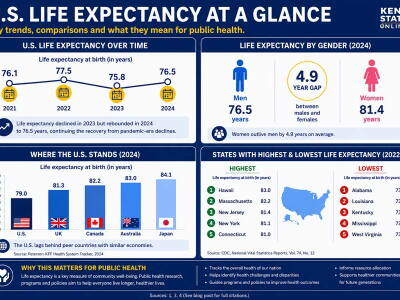
By tracking life expectancy in the U.S., public health professionals can identify critical areas for intervention and monitor the impact of widespread medical advancements. This blog will cover current statistics, historical trends and demographic differences in life expectancy in the United States.